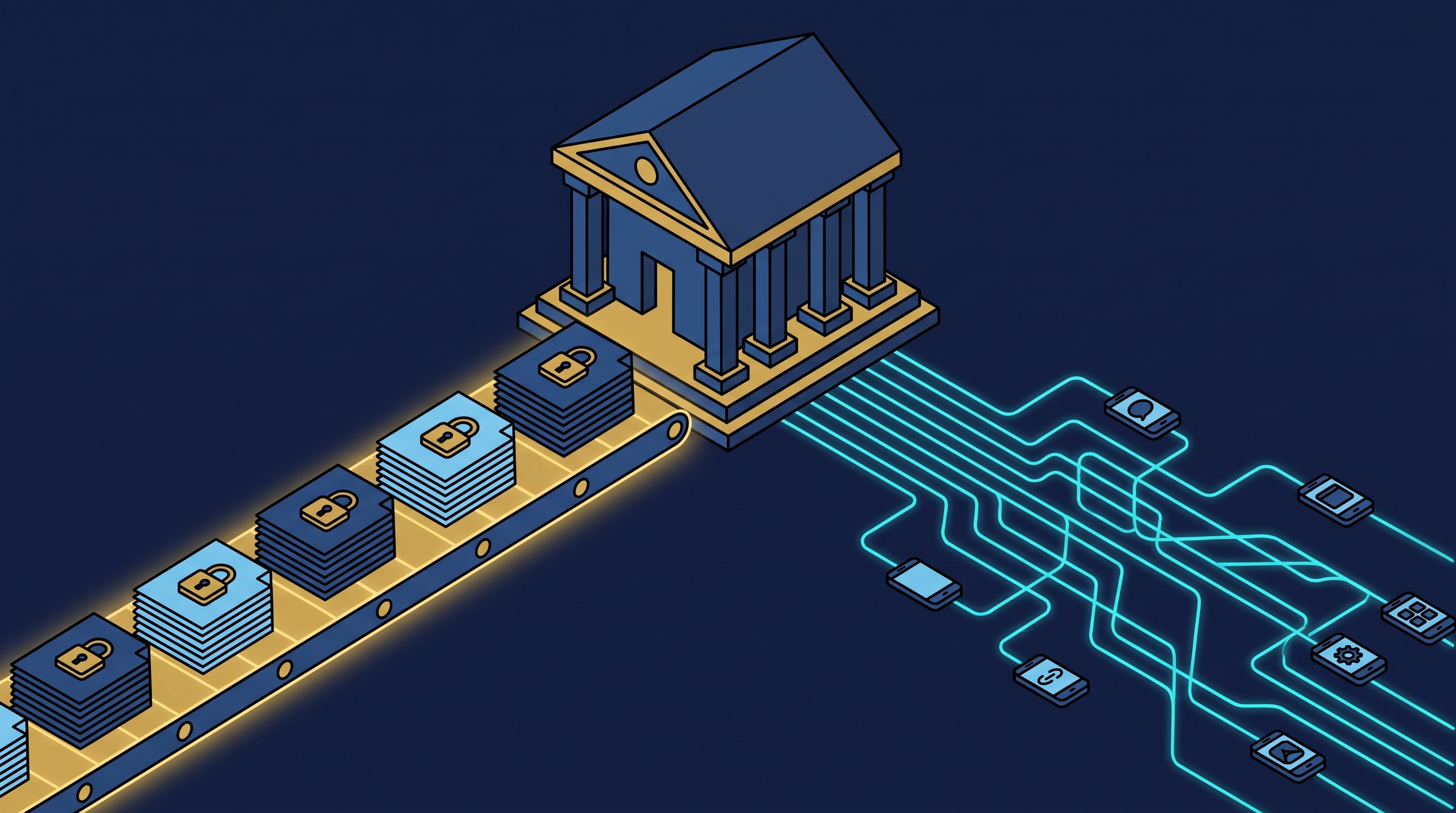
If you spent any time on LinkedIn this week, you probably saw the Wero logo next to the names of eleven Dutch banks. On 26 October 2026, the European Payments Initiative (EPI) started rolling out Wero for online payments in the Netherlands. It is the first step in replacing iDEAL, the payment method Dutch shoppers have used for about two decades.
It looks like a rebrand. It is actually the most important test Europe's sovereign payments project has faced so far.
Why the Netherlands is different
In Germany, Wero has had to win merchants one at a time, and it has been slow going. In August, a review of the German market found that none of the country's ten largest online retailers had integrated Wero, that Rewe had ruled it out for now, and that Otto, Ikea and Zalando were still evaluating it after more than five months. EPI's own head of merchant acquisition described it as a chicken-and-egg problem: without a critical mass of consumers, integration is not worth it for retailers.
The Netherlands reverses that problem. iDEAL processes more than 1.5 billion payments a year and is the default checkout for Dutch e-commerce. EPI acquired iDEAL in 2023. Wero does not need to convince Dutch shoppers to try something new. It needs to move an existing habit onto new rails without breaking it. Around 15 million Dutch consumers are expected to be part of the migration by 2027.
What happens now
- Banks are live first. ABN AMRO, ASN Bank, bunq, BUUT, Finom, ING, Knab, Nationale-Nederlanden, Rabobank, Triodos Bank and Van Lanschot Kempen are part of the launch.
- Merchants move at their own pace. Shops switch from iDEAL to Wero through their payment service providers, each on its own timetable.
- There is a hard deadline. The parties aim to complete the migration by 31 December 2027.
- Features follow later. Subscriptions and pay-on-delivery are planned for Q2 2027, and purchase protection is due to be embedded for Dutch consumers in January 2028.
- Pricing stays put for now. Wero scheme pricing will remain broadly aligned with the current iDEAL|Wero level until 31 December 2028.
For consumers, nothing changes on paper: they keep paying in their own banking app. That is also where the first risk sits. When the switch was announced, Currence warned that fraudsters may use it to send fake "update your details" messages. EPI now stresses that neither Wero nor the banks will ask for personal or banking information outside the secure banking environment.
The numbers behind "sovereign"
Wero peer-to-peer payments are live in Belgium, France, Germany and Luxembourg, with 60 million users. Online payments are live in Germany, Belgium and Luxembourg. In France, the e-commerce rollout started in September with about 20 merchants, including Lidl, Decathlon, Ikea and Air France, while in-store payments have been pushed to the second half of 2027.
Through the European Network for Payments, Wero and the EuroPA schemes (Bizum, Bancomat, MB WAY and Vipps MobilePay) aim to connect solutions serving around 130 million users across 13 countries.
But registered users are not checkout volume. Germany shows that a large peer-to-peer base does not automatically turn into merchant acceptance. The Netherlands is the first market where Wero takes over checkout volume instead of having to create it. If it works, the German retailers who are waiting will have a reference case. If the switch causes friction, every sceptic in the market will have one too.
Where it could go wrong
- Migration risk. Moving more than a billion payments a year onto new infrastructure, starting just before the peak shopping season, leaves little room for outages at checkout.
- Feature gap. Purchase protection only arrives in 2028. Until then, card schemes and wallets keep an argument for higher-value and cross-border purchases.
- Merchant workload. The Dutch Payments Association has said that some banks, PSPs and retailers face significant system and process changes.
- Expectations. Even EPI does not claim Wero will become Europe's only payment solution. Its strategy director Ludovic Francesconi told Journal du Net that this is almost impossible to imagine today. Interoperability with other national schemes is the realistic path.
What to watch
- The Dutch switch rate. How many checkouts run on Wero rails by mid-2027, and whether conversion holds.
- German retailers. Whether Otto, Zalando or Rewe move once the Dutch volume is visible.
- France. Société Générale and BoursoBank are expected to join in November.
- The digital euro. In August, Bundesbank board member Lutz Lienenkämper floated integrating the digital euro into the Wero wallet. The ECB pilot is planned for 2027.
What this means for builders
If you build checkout, PSP or ERP integrations for the Dutch market, your iDEAL integration has an end date. Wero belongs in the 2027 roadmap now, not after the deadline. If you sell across borders, one Wero integration increasingly covers several markets. And if you build on account-to-account payments, Wero runs on the same instant payment rails that Verification of Payee has just spent a year securing.
Europe has talked about payment sovereignty for years, often in the context of cloud and data. The Netherlands is where the idea gets measured at the checkout, one payment at a time.
This article was researched and written with AI assistance for FinTech Weekly. All facts are linked to their sources in the text.