Panic has set in for executives at top crypto brokers and prediction market companies.
After the landmark ruling from a jury in Los Angeles last week that social media platforms run by Meta and Alphabet are addictive, prediction markets along with retail and crypto brokers are likely the next targets for a flood of lawsuits claiming they knowingly created products designed to hook users.
It’s about time.
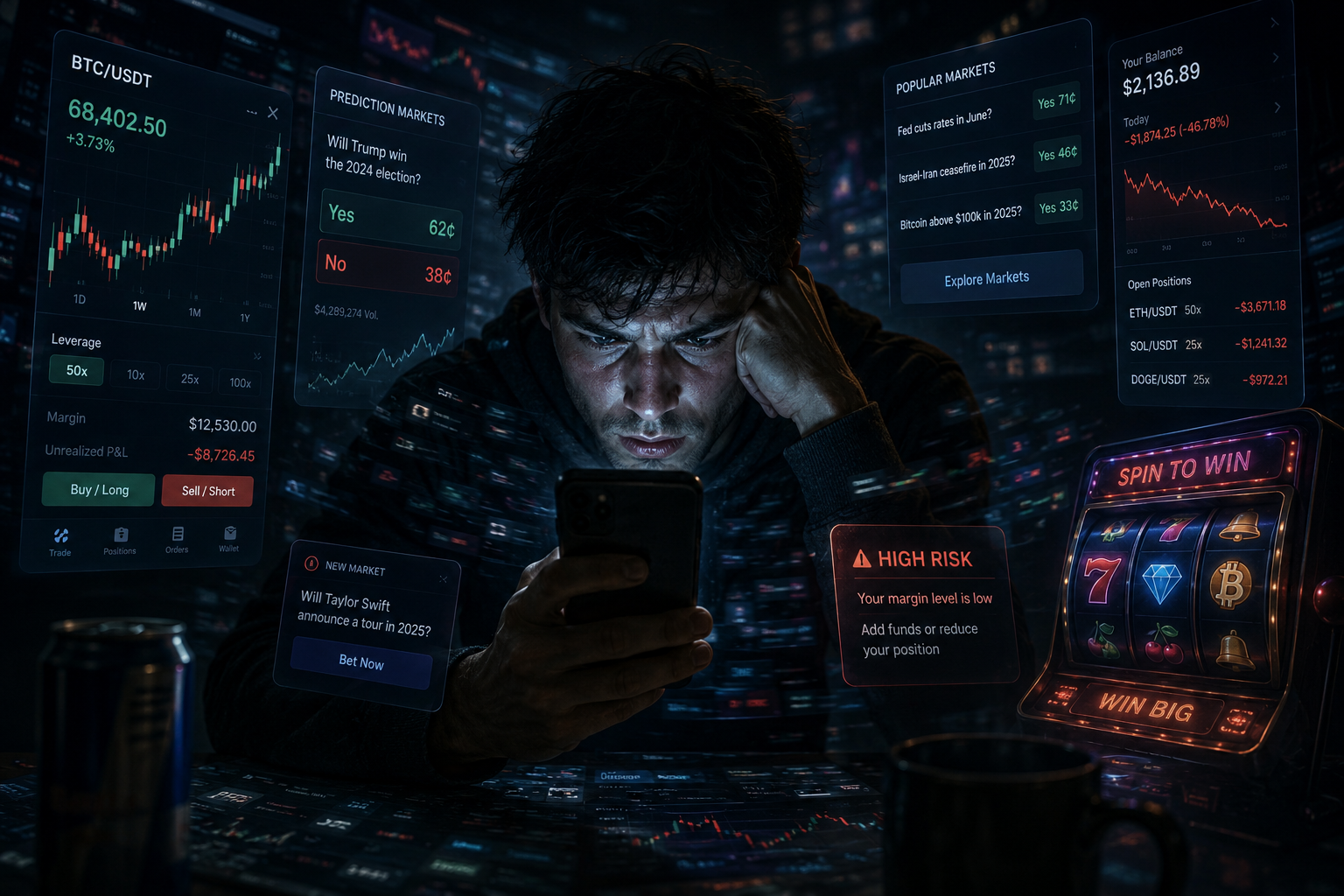
For far too long, retail and crypto brokers have avoided legal scrutiny while ensnaring users. Those brokers who offer leverage to traders – allowing ill-equipped retail investors to essentially borrow money to amplify the impact of their transactions – have created an especially addictive product that can have devastating downsides.
Add to this the rapid growth of prediction markets, which have brought gambling to all 50 states and across the world, including in jurisdictions that legally ban wagering. By being able to bet on virtually anything under the guise of calling it a prediction, a whole new generation is rapidly being exposed to a highly addictive product through some of the most powerful cultural forces, such as sports, politics and celebrity gossip.
With a legal precedent now set in the Meta and YouTube trial, a clear path has been laid out for victims and their lawyers to follow: products that harm their users through addiction may not profit from exploiting that addiction.
The damage caused by social media addiction can be severe, but it pales in comparison to the compounded harm brought about by deviously designed products offered by some brokers and prediction peddlers. Not only do these gambling products create the risk of depression and anxiety for their users, as social media does, but they also run the very real risk of draining their life savings and plunging them into ruinous levels of debt.
Researchers and mental health professionals have long known that gambling is a particularly powerful form of addiction, with compulsive financial trading being no different than wagering at the horse track. Academics have even created The Problematic Cryptocurrency Trading Scale to identify levels of addiction in crypto traders. All the classic signs of addiction are present in trading and prediction dependency, including: risky, compulsive behaviors; denial; sacrificing social life; and the inability to stop.
To be clear, the risk of becoming addicted to trading isn’t limited to some minuscule subset of the population with an existing predisposition. Just as the social media behemoths knew early on that their products sucked in users, brokerage firms intentionally market the alluring dream that their customers can become rich, pushing an urgency and fear of missing out. These firms know how to make their products compelling to broad swaths of people; who doesn’t want to be rich?
The brokers and prediction market companies can see how their users trade and lose at a high rate until those users eventually go broke and disappear from the platform because they have no more money to lose. This business model relies on luring in a never-ending stream of new marks to exploit from all walks of life.
I understand this world well, having served as the CEO of DigitalAssets.AG until we sold the company in 2021. Since then, the predatory behavior in the industry has skyrocketed, undermining much of the initial optimistic vision that trading on the blockchain was democratizing and bringing transparency to retail investors.
Case in point, retail brokers in Europe (called CFD Providers) are required to disclose how many of their users lose money. That data shows that a staggering 72% of retail traders are losing money. When you factor in that a significant portion of the remaining 28% barely break even, it likely means that less than 10% actually have real winnings.
Fortunately, the social media case shows that accountability is coming. It’s not just courtrooms in the U.S. that are holding digital addiction-peddlers liable. The Federal Supreme Court in Germany recently ruled that online gambling sites without a state law license must refund all losses to their users.
The harm is real. The addiction is clear. The legal risk is now nearly limitless. The trial lawyers are finalizing their lawsuits. Prediction markets and crypto brokers are about to be held accountable. Bet on it.
—––––––
Patrick Gruhn, LL.M., founded Crypto Lawyers in 2014 and serves as the CEO of Perpetuals.com, an AI-powered financial services company that is leveling the playing field for traders.
After the landmark ruling from a jury in Los Angeles last week that social media platforms run by Meta and Alphabet are addictive, prediction markets along with retail and crypto brokers are likely the next targets for a flood of lawsuits claiming they knowingly created products designed to hook users.
It’s about time.
For far too long, retail and crypto brokers have avoided legal scrutiny while ensnaring users. Those brokers who offer leverage to traders – allowing ill-equipped retail investors to essentially borrow money to amplify the impact of their transactions – have created an especially addictive product that can have devastating downsides.
Add to this the rapid growth of prediction markets, which have brought gambling to all 50 states and across the world, including in jurisdictions that legally ban wagering. By being able to bet on virtually anything under the guise of calling it a prediction, a whole new generation is rapidly being exposed to a highly addictive product through some of the most powerful cultural forces, such as sports, politics and celebrity gossip.
With a legal precedent now set in the Meta and YouTube trial, a clear path has been laid out for victims and their lawyers to follow: products that harm their users through addiction may not profit from exploiting that addiction.
The damage caused by social media addiction can be severe, but it pales in comparison to the compounded harm brought about by deviously designed products offered by some brokers and prediction peddlers. Not only do these gambling products create the risk of depression and anxiety for their users, as social media does, but they also run the very real risk of draining their life savings and plunging them into ruinous levels of debt.
Researchers and mental health professionals have long known that gambling is a particularly powerful form of addiction, with compulsive financial trading being no different than wagering at the horse track. Academics have even created The Problematic Cryptocurrency Trading Scale to identify levels of addiction in crypto traders. All the classic signs of addiction are present in trading and prediction dependency, including: risky, compulsive behaviors; denial; sacrificing social life; and the inability to stop.
To be clear, the risk of becoming addicted to trading isn’t limited to some minuscule subset of the population with an existing predisposition. Just as the social media behemoths knew early on that their products sucked in users, brokerage firms intentionally market the alluring dream that their customers can become rich, pushing an urgency and fear of missing out. These firms know how to make their products compelling to broad swaths of people; who doesn’t want to be rich?
The brokers and prediction market companies can see how their users trade and lose at a high rate until those users eventually go broke and disappear from the platform because they have no more money to lose. This business model relies on luring in a never-ending stream of new marks to exploit from all walks of life.
I understand this world well, having served as the CEO of DigitalAssets.AG until we sold the company in 2021. Since then, the predatory behavior in the industry has skyrocketed, undermining much of the initial optimistic vision that trading on the blockchain was democratizing and bringing transparency to retail investors.
Case in point, retail brokers in Europe (called CFD Providers) are required to disclose how many of their users lose money. That data shows that a staggering 72% of retail traders are losing money. When you factor in that a significant portion of the remaining 28% barely break even, it likely means that less than 10% actually have real winnings.
Fortunately, the social media case shows that accountability is coming. It’s not just courtrooms in the U.S. that are holding digital addiction-peddlers liable. The Federal Supreme Court in Germany recently ruled that online gambling sites without a state law license must refund all losses to their users.
The harm is real. The addiction is clear. The legal risk is now nearly limitless. The trial lawyers are finalizing their lawsuits. Prediction markets and crypto brokers are about to be held accountable. Bet on it.
—––––––
Patrick Gruhn, LL.M., founded Crypto Lawyers in 2014 and serves as the CEO of Perpetuals.com, an AI-powered financial services company that is leveling the playing field for traders.