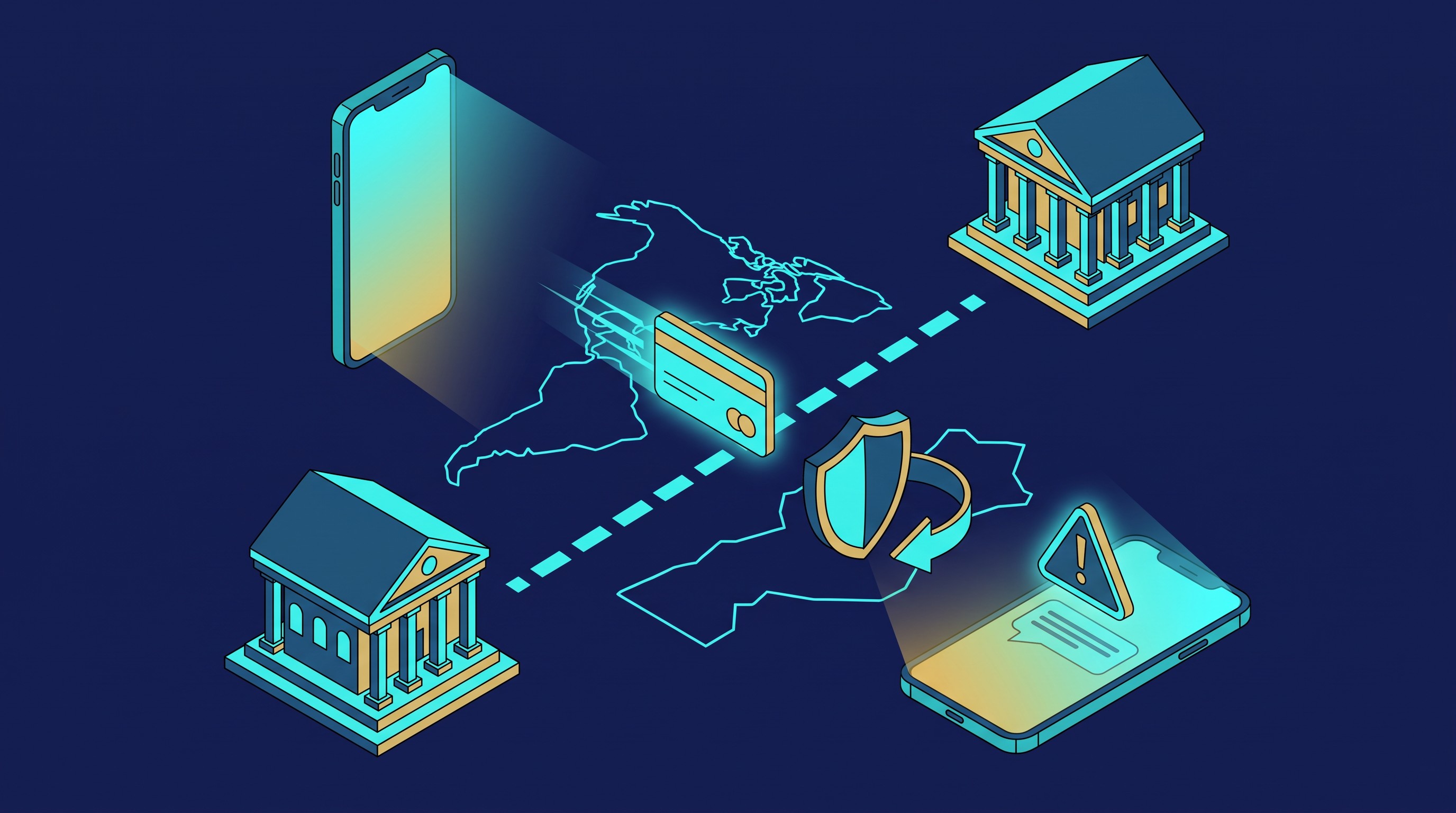
At an online checkout at Lidl, a shopper selects Wero, confirms the payment in her banking app and is done. No card number is entered, no card is tapped and no international card scheme is visibly involved. For a moment, the transaction looks like the version of European payments policymakers have spent years promising: European bank rails, instant account-to-account transfer, stronger identity checks and no reliance on a foreign card network.
Then comes the counter-number. International card schemes still handled about 61% of euro-area card payments in 2022. Thirteen euro-area countries rely on them entirely, and none of the processors operating across EU borders is fully EU-owned, according to an ECB report published in February 2025.
That gap is the real story of European payments. Europe is not ahead, and it is not yet winning. But between 2025 and 2029, it has its first credible opportunity to assemble the pieces of an end-to-end retail payments system: faster bank rails, stronger fraud controls, a modern licensing regime, a consumer-facing wallet and, eventually, public digital money.
Whether they add up is still open.
The rails arrive first
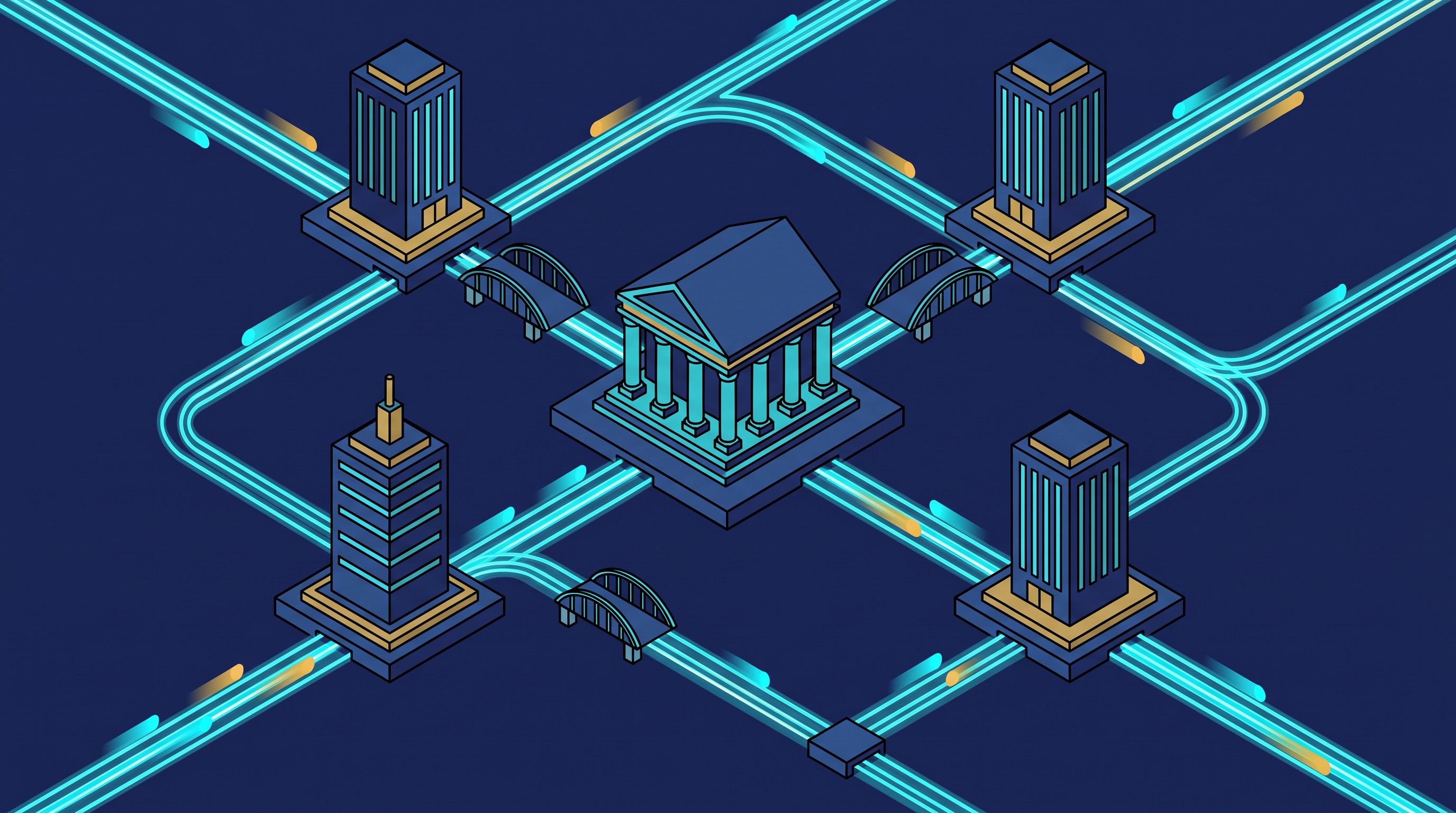
Europe's most consequential payments change of the past year was in the plumbing.
Since 9 October 2025, payment service providers in the euro area have been required to send instant euro credit transfers and to offer Verification of Payee. Instant payments may not cost more than ordinary transfers, as set out in the Instant Payments Regulation.
The practical meaning is easy to overlook. A euro payment can now move between accounts in seconds, at any time, with the payer receiving a match, close-match or no-match response before confirming. That does not eliminate fraud, but it removes one of the most basic weaknesses of the legacy account-to-account experience: sending money to an IBAN and hoping the name is right. We looked at how that has worked in practice in Verification of Payee Is One Year Old.
For fintechs, the more important shift is access. Since October 2025, licensed payment and e-money institutions that meet the requirements of the TARGET Guideline can connect directly to TARGET and TIPS, as the ECB set out. Instant payments are no longer solely a bank product. A licensed payment or e-money institution can build directly on euro-area instant rails, while ERP providers, marketplaces and payroll platforms can reach them through such a provider.
Payment and e-money institutions in the euro area must send and receive instant payments by 9 April 2027, under the same regulation. That deadline matters because it turns instant payments from a bank-led upgrade into a market-wide expectation.
But rails alone do not create a European payment network. A fast bank transfer is not yet a checkout experience. It does not automatically give merchants dispute management, consumer protection, recurring billing, tokenisation, loyalty integration or the checkout conversion that cards have spent decades optimising.
The layer above the rails, the product experience that makes instant account-to-account payments feel as simple as tapping a card, still has to be built.
The rulebook catches up
The second layer is legal. PSD3 and the Payment Services Regulation are intended to replace a rulebook designed for an earlier era of open banking, cards and e-money.
The political agreement came on 27 November 2025, final compromise texts followed in April 2026, and the Council adopted the texts at first reading on 29 October 2026. The European Parliament still has to approve them in plenary. Most rules are expected to apply about 21 months after entry into force, with the payee-check provisions about six months later, according to current estimates. In practice, that puts much of the regime in 2028.
The changes are more consequential than the legislative timeline suggests. PSD3 and the PSR would merge payment-institution and e-money licensing into a more coherent framework. Conduct rules would move into a directly applicable regulation, reducing the scope for divergent national implementation, one of the persistent frictions of the current PSD2 regime. Verification of Payee would extend beyond the euro credit transfers already covered by the Instant Payments Regulation. And the package adds clearer fraud-liability rules, including refunds for customers tricked by fraudsters impersonating their bank.
For founders, that last point may be the most important. Fraud liability has long been one of the grey areas in European payments: banks, PSPs, merchants and consumers can each have a plausible claim to innocence after a social-engineering scam. A clearer allocation of responsibility will not make fraud disappear. But it can determine who has an incentive to invest in prevention, detection and reimbursement. How other markets handle this is the subject of our look at scam reimbursement in the UK, the EU and Brazil.
For compliance teams, the nearer-term issue is different. Firms are already building for rules that are not yet in force. Licensing strategy, customer onboarding, fraud controls, API roadmaps and product design will need to anticipate a regime whose final operational details are still being settled.
European firms have long had to build ahead of legal certainty. But it does create a familiar risk: compliance investment gets locked into interpretations that may change before the rules apply.
What is still missing is clarity on implementation. A regulation can be adopted, but its value depends on technical standards, supervisory convergence and whether national authorities interpret its obligations in compatible ways. We tracked where the file sat among other pending rules in The Waiting Room.
Wero is the product test
The third layer is consumer-facing. This is where Europe has historically struggled.
Wero is the most visible current attempt to turn European bank rails into a recognisable consumer payment brand. It launched person-to-person payments in Germany, France and Belgium in 2024. German e-commerce followed in November 2025, with Eventim as the first live merchant. By September 2026, EPI named Decathlon, dm, Eventim and Lidl among the German online merchants accepting it.
The adoption numbers are meaningful, though they should be read carefully. Wero reached 43.5 million registered users and more than €7.5 billion in transfers in its first year, and EPI reported 58 million users when Luxembourg went live on 1 September 2026. More than 48,000 merchants across Belgium, France, Germany, Luxembourg and the Netherlands had processed Wero transactions by mid-September.
Those figures show traction. They do not yet prove habit. A registered user is not the same as an active user, and P2P volume is not the same as recurring e-commerce or in-store payment volume. EPI does not publish active-user figures. Wero's next test is whether consumers use it when they are not splitting a dinner bill or repaying a friend.
The hardest channel remains physical retail. Wero is live for in-store payments in Belgium and Luxembourg. In Germany it is so far available only in specific settings such as EV charging, and broader point-of-sale availability in Germany and France is planned progressively from 2027. That makes the German e-commerce rollout an important early test, but not yet proof that Wero can replace a card at the till.
EPI's chief executive, Martina Weimert, describes the task in exactly those terms: "This collective mobilisation is essential to turning a European payment ambition into an everyday European payment solution," she said in September 2026.
Still, the strategic point is real. Wero gives European banks a consumer interface built on European rails. It gives merchants an alternative to card acceptance. And it gives policymakers a visible answer to the question of whether Europe can create a payment brand that consumers actually recognise. In the Netherlands, it is replacing an established one, as we described in Wero Is Taking Over iDEAL.
The more interesting development is what Wero is being connected to. On 2 February 2026, EPI signed a memorandum of understanding with Bancomat, Bizum, SIBS (MB WAY) and Vipps MobilePay, the members of the EuroPA alliance. Together, the networks reach about 130 million users across 13 countries. Cross-border P2P is planned for 2026; e-commerce and point-of-sale payments for 2027. It is not a merger: existing payment solutions remain unchanged and connect through a shared interoperability hub.
That structure is revealing. Europe is not trying to build one super-app. It is trying to connect national payment habits into a cross-border network.
That may be the right approach. Consumers already have local loyalties: Bizum in Spain, Bancomat in Italy, MobilePay in the Nordics, Wero in parts of western Europe. Forcing them into one app would be politically and commercially difficult. Interoperability lets each market keep its familiar front end while building a shared European capability underneath.
But interoperability is also harder than a single brand. It requires common standards, consistent merchant acceptance, predictable liability allocation and a user experience that holds up when a German shopper pays an Italian merchant. Similar links are being built between fast-payment systems worldwide, as we covered in Countries Are Wiring Their Payment Systems Together.
The open question is whether cross-border acceptance becomes routine or stays a press-release milestone.
The public option
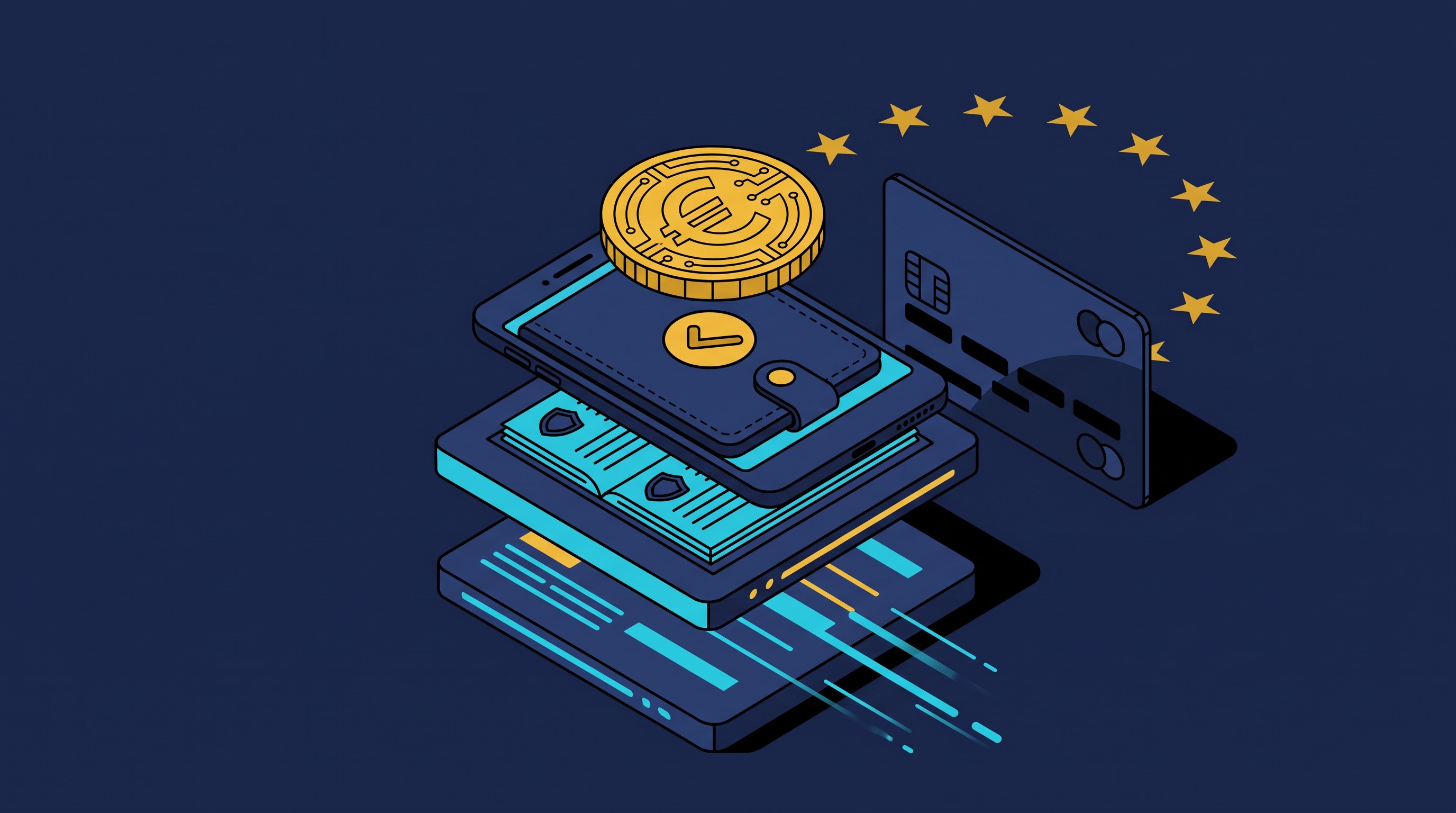
The fourth layer is the digital euro.
The Council agreed its position in December 2025. Parliament backed trilogue talks on 9 July 2026 by 416 votes to 169, with 22 abstentions. Negotiations are ongoing.
On 14 July 2026, the ECB selected 36 payment service providers from across the euro area for a 12-month pilot starting in the second half of 2027. The call had drawn more than 50 applications. Participants will test a beta version, including person-to-person, e-commerce and in-store payments.
A first issuance is possible in 2029, but only if the legislative process concludes in 2026 and the ECB's Governing Council then decides to issue, as the ECB has made clear. That distinction matters. The digital euro is still a public infrastructure project without a launch date, and its political and operational conditions remain unresolved.
The most useful way to think about the digital euro is as a potential public foundation beneath private payment products.
A digital euro would be digital central bank money. Wero, by contrast, is a private, bank-led payment product built on commercial banking rails. They solve different problems. Wero can compete on user experience, merchant integration and product velocity. A digital euro can provide a neutral, public monetary layer that private providers can distribute.
The Parliament's rapporteur, Fernando Navarrete Rojas, makes the same distinction. "The real answer to the geopolitical problem that we have of over-reliance cannot be just ECB-centric alone," he said in an interview with IMEN Economics in July 2026.
The risk is that Europe treats the digital euro as a substitute for commercial innovation. If consumers see it merely as another wallet, it will struggle. If PSPs see it merely as another compliance obligation, adoption will be reluctant.
The opportunity is different: a digital euro could give European payment providers a common monetary asset, reduce dependence on foreign card networks for certain use cases, and create a public baseline for offline, inclusive and resilient payments.
Europe also still lacks a settled division of labour. It needs to decide, clearly and repeatedly, what the digital euro is for and what it is not for.
The honest gap
Europe has rails, rules, wallets and a potential public currency. What it does not yet have is a payment system that has displaced the incumbent card economics.
The 61% figure remains the test. It stands for interchange, scheme fees, processing economics, data flows, dispute rules and strategic dependence. It also stands for a consumer experience that works: cards are fast, familiar, globally accepted and deeply embedded in checkout flows.
Merchants are already setting the bar for any European alternative. "A European payment instrument of our own must not be more expensive than the established alternatives," Stefan Genth, chief executive of the German retail federation HDE, said on 11 November 2026 in a statement on digital euro fees (translated from German).
Europe cannot beat the card economy by regulation alone. It needs product quality, merchant economics and consumer habit. Wero's early e-commerce expansion is encouraging, but the large German online retailers have been cautious. According to Handelsblatt research reported in EuroShop's trade magazine, none of Germany's ten largest online retailers had integrated Wero by late April 2026. Otto, Ikea and Zalando were still reviewing it, Rewe ruled it out, citing limited brand recognition, and Rossmann, announced as a launch partner in November 2025, says integration is still under review. The hard test is whether a shopper in Cologne chooses Wero for a routine online purchase without thinking about it.
There is also a risk that Europe builds a technically impressive stack while leaving the commercial layer fragmented. Instant payments can be fast. Verification of Payee can reduce certain fraud. PSD3 can clarify licensing and liability. But if merchant onboarding remains expensive, cross-border acceptance remains patchy and wallets remain nationally siloed, Europe will have modernised its plumbing without changing its market structure.
The optimistic reading is that the sequence is finally right. Rails arrived first. Rules are arriving next. Product is emerging in parallel. Public money may follow. That is how a payments ecosystem should be built.
The sceptical reading is equally credible. Europe has spent years building components without consistently turning them into a coherent consumer experience. The next three years will show whether this time is different.
What to watch until 2029
Three markers will tell us whether Europe is actually owning its payment stack.
- Card-scheme share. If the share of euro-area card payments running through international schemes stays near 61%, Europe will have built better rails without changing the underlying dependency. If it declines materially, especially in everyday e-commerce and point-of-sale payments, the strategy is working.
- Wero's use beyond P2P. Watch merchant acceptance, transaction frequency and cross-border usage once the EPI-EuroPA interoperability plans move from memoranda to live services. The key question is whether consumers use Wero repeatedly for commerce, and whether merchants treat it as a primary payment method rather than an extra button at checkout. Registered-user counts will not answer that.
- The digital euro's legal and operational path. Watch whether the legislation concludes on the timetable the ECB assumes, whether the 2027 pilot produces usable merchant and PSP integrations, and whether the ECB confirms a credible path to issuance in 2029. The pilot will test technology and user experience; legislation and a Governing Council decision remain separate gates.
Europe does not need to win every payment scenario. It does not need to replace cards overnight, and it should not pretend that a domestic wallet can solve every cross-border problem.
But it does need to stop treating payments sovereignty as a slogan. Between now and 2029, Europe has the rails, the rules, the wallets and potentially the public money to build something more durable than another national fintech success story. We looked at the infrastructure side of that contest in Payments Got Fast. The Fight Is Now Over Who Controls the Rails.
The question is whether it can turn those components into a system that consumers use without noticing, and that merchants choose because it is better. Being European will not be enough.
This article was researched and written with AI assistance for FinTech Weekly. All facts are linked to their sources in the text.