By Vikram Arun, Co-Founder and CEO of Superform.
The intelligence layer for fintech professionals who think for themselves.
Primary source intelligence. Original analysis. Contributed pieces from the people defining the industry.
Trusted by professionals at JP Morgan, Coinbase, BlackRock, Klarna and more.
Join the FinTech Weekly Clarity Circle →
More than half of U.S. consumers now primarily interact with their bank through digital channels rather than physical locations. Revolut, Chime, and Marcus by Goldman Sachs proved that consumers would adopt digital-first financial products when usability friction was reduced, and the market followed. The global neobank market is forecast to grow from approximately $210B in 2025 to more than $7.6T by 2034. However, with only 15% of neobanks profitable in 2026, the question worth asking is why?
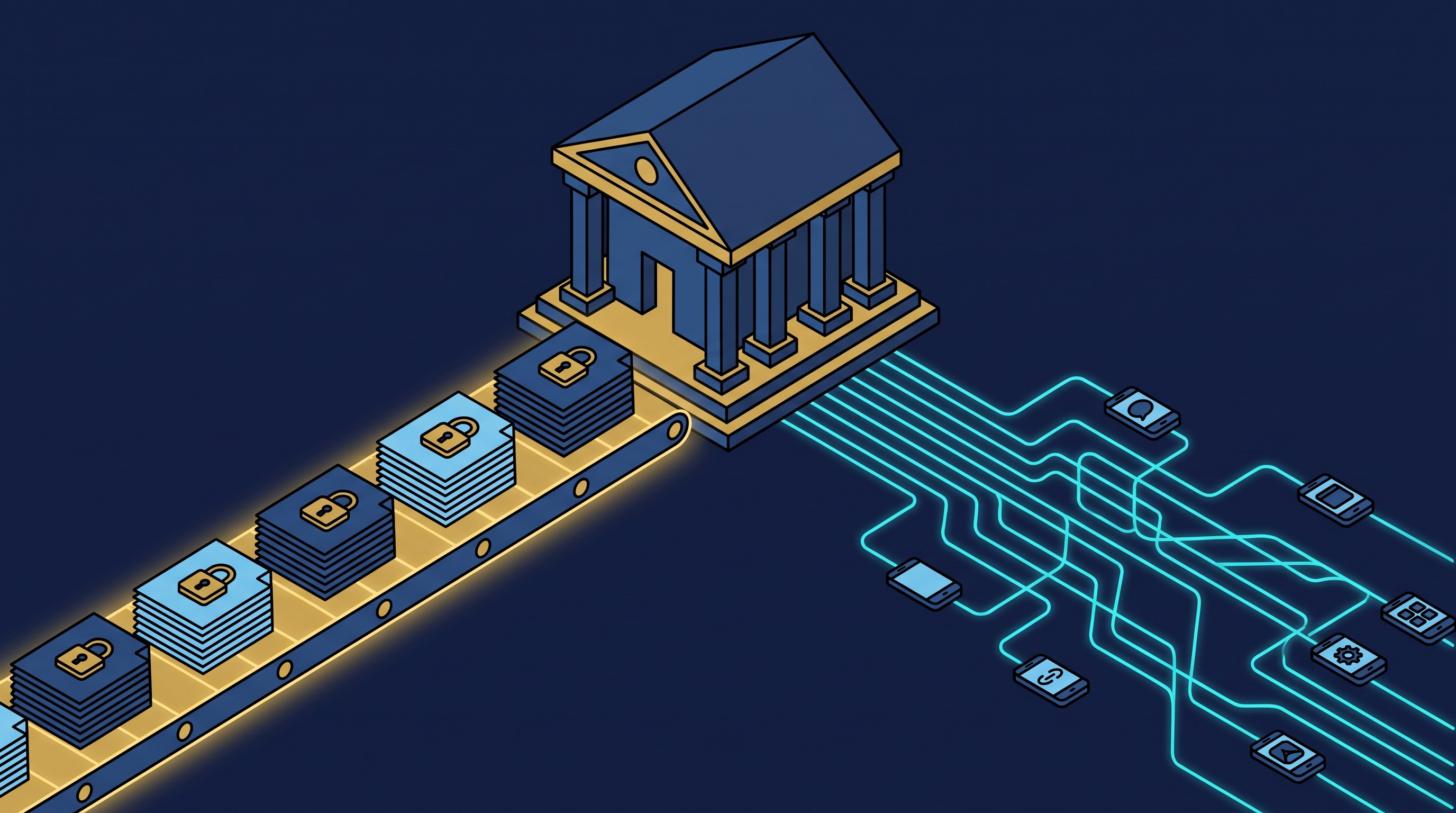
The neobank revolution delivered on half its promise. It solved distribution, usability, and behavioral adoption, but did not fundamentally redesign the custodial financial architecture underneath. The next phase of financial technology is not improved applications built on existing rails. It is new infrastructure that enables direct participation in global yield markets while preserving user control of assets. The neobank era is the AOL moment of finance: essential, transformative, but ultimately a bridge to the open infrastructure that comes next.
Neobanks have won the Access and Usability War
Before Chime and Revolut, banking required a physical presence, a human relationship, and business hours. Digital-first platforms expanded participation, especially among retail users that traditional institutions had spent decades ignoring.Revolut now sits at approximately 65M global users, Chime at around 9.5M in the U.S. alone. This shift took an industry built on inertia and made it feel like a product people actually wanted to use.
But the success of the neobank model is primarily distributional rather than structural. Access improved, along with execution speed, and interface simplicity. The underlying architecture governing custody, capital routing, and yield generation did not.
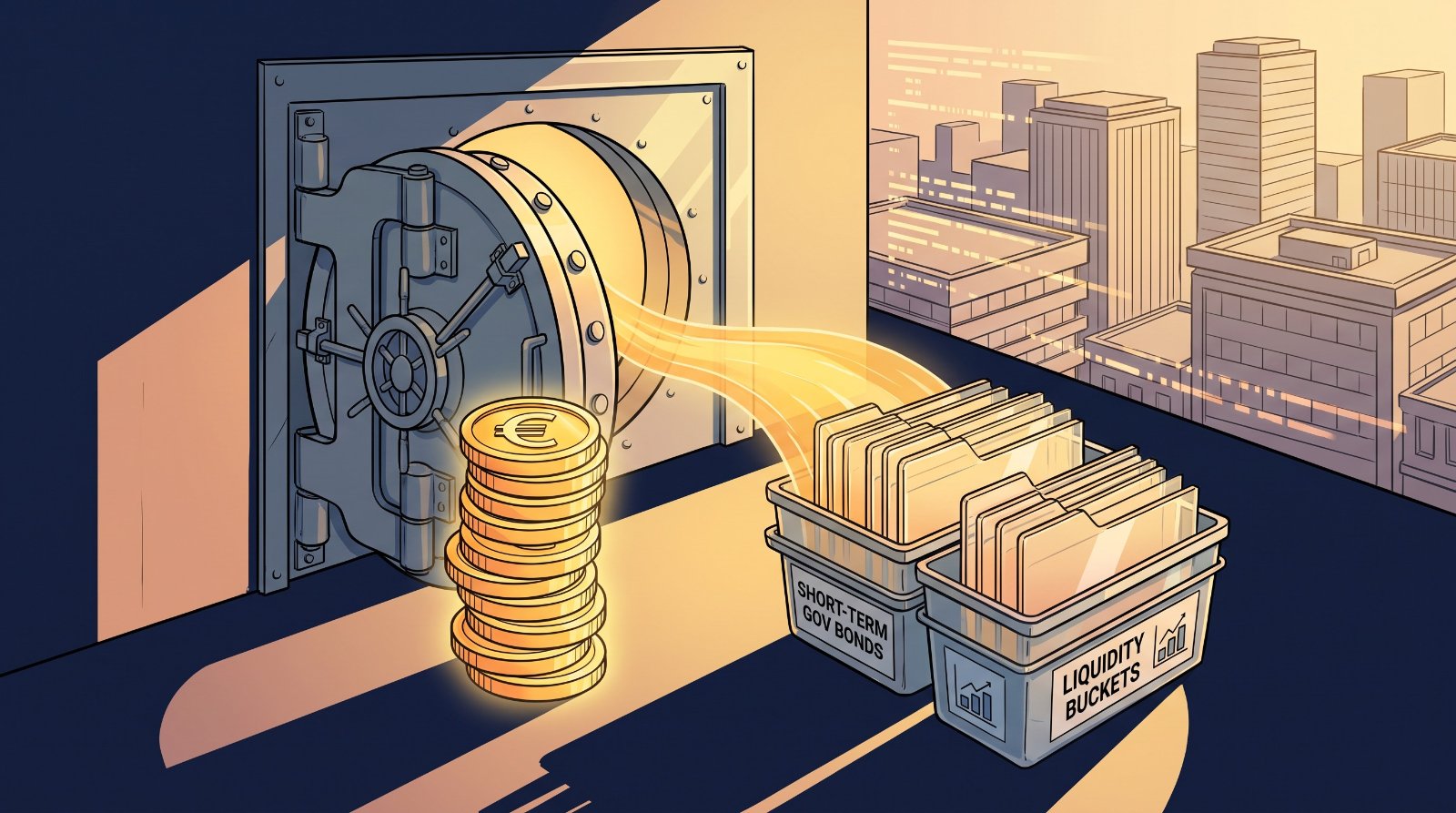
High-yield savings accounts in early 2026 sit around 3.5% to 5% APY, that’s not a market ceiling, it’s the ceiling custodial intermediation creates once the platform takes its margin. Financial structures operating outside traditional banking balance sheets can reach 8% to 20% APY depending on design, liquidity demand, and risk exposure. The gap between those two numbers is not a yield anomaly, it’s the cost of intermediation made visible.
Users traded branch dependency for platform dependency, the relationship between a person and their money did not change. It moved from a manager to an app notification, running on the same traditional financial infrastructure.
Redesigning the Earn and Ownership Layer
The next evolution is an infrastructure-level redesign focused on capital ownership, custody control, and deployment mechanics. Self-custodial architecture where code enforces the rules instead of corporate policy. Direct access to global yield markets where returns reflect actual market conditions rather than a platform's profitability requirements. Over 1,500 yield opportunities currently running at 4% to 10% APY on cash and crypto, accessible without transferring custody to anyone. Platform economics shift accordingly, from spread-based intermediation toward providing secure access, execution, and market connectivity, where revenue comes from being genuinely useful rather than the gap between what your money earns and what you are allowed to keep.
In traditional finance, decisions about how your money is managed, where it is deployed, and how the system evolves are made by boards and executives inside institutions you have no vote in. Open financial rails change that relationship entirely. Decision-making power shifts from a boardroom to the user base itself, giving people a direct voice in the infrastructure their capital runs on. This is not just a product feature, it's reshaping decades of control that was never in the hands of the people whose capital was actually at stake.
Are Users Ready for Self Custody?
Consumer financial behavior research shows that 67% of users rank trust, safety, and regulatory protection as top factors when choosing a financial product. The skepticism that fintechs and traditional finance bring to 8%+ yields is legitimate, and the security record of open rails gives them reasonable ground to stand on. Total crypto theft reached $3.4B in 2025, with the Bybit exploit alone accounting for nearly $1.5B. Unlike traditional banking, there is no fraud reversal mechanism, no FDIC backstop, and no dispute process when losses occur on open rails.
But this objection assumes the risk profile of open infrastructure is fixed, and it is not. It also assumes traditional rails offer protections that, in practice, are far less universal than the narrative suggests. Platforms like Robinhood and most crypto-adjacent neobank products carry no FDIC protection, and the average user sitting in a high-yield neobank account is closer to uninsured than they realize.
On open rails, the burden of security is shifting from individual users to protocol-level design, where audited smart contracts with formal verification, governance-controlled circuit breakers, and real-time threat detection are infrastructure solutions rather than user responsibilities. Total value stolen from individual wallets fell from $1.5B in 2024 to $713M in 2025.. By February 2026, crypto hacking losses had fallen to $26.5M, signifying a 98% decrease year over year according to PeckShield. At scale, protocol revenues fund treasury backstops that protect returns, and structured products give users an explicit choice between senior positions with protected capital and lower yields, or higher exposure and higher upside, with full visibility into the mechanics rather than having that choice made invisibly inside a platform's balance sheet.
After the internet boom, nobody chose TCP/IP or selected HTTPS when they started shopping online, they just got a better and safer experience because the infrastructure underneath improved. Open financial rails are on the same path where users will not adopt self-custody in any conscious sense, but will simply stop noticing that they have it.
Chapter One Made Banking Feel Modern. Chapter Two Makes It Yours.
Neobanks did something genuinely difficult. They forced a complacent industry to modernize, making financial services feel accessible and digital-native for the first time. That behavioral shift was the foundation the next evolution needed to run on. But distribution is not the same as infrastructure, and building a better interface while leaving the underlying architecture unchanged is not disruption, just a renovation.
The ceiling has always been structural. As long as a custodial intermediary sits between users and global yield markets, the returns users receive will reflect what that intermediary decides to pass on after margin, not what the market actually offers.
The next chapter is direct access, but more than that it is a financial architecture where the rules are transparent, the risk is verifiable, and users have a voice in how the system evolves. Returns that reflect actual market conditions, rules that are automatically coded and verified rather than subject to a board decision on a random Tuesday morning. The next phase is ownership that sits with the user, not the platform.
About the author
Vikram Arun is the Co-Founder of Superform, the first user-owned stablecoin neobank. With a background in engineering and finance, Vikram has been building in the crypto space since 2017. Prior to Superform, he co-founded Ledger Capital, a crypto research firm, and worked on Wall Street conducting biotech equity research and analyzing high-growth technologies.
At BlockTower Capital, Vikram co-led a $100m DeFi and Yield Fund, building scalable trading strategies across 15 chains with a focus on statistical arbitrage. Seeing the need for scalable DeFi products, he left BlockTower in 2021 to launch Superform. Vikram holds a Bachelor’s in Engineering and a Master’s in Finance from Washington University in St. Louis.