The intelligence layer for fintech professionals who think for themselves.
Primary source intelligence. Original analysis. Contributed pieces from the people defining the industry.
Trusted by professionals at JP Morgan, Coinbase, BlackRock, Klarna and more.
Join the FinTech Weekly Clarity Circle →
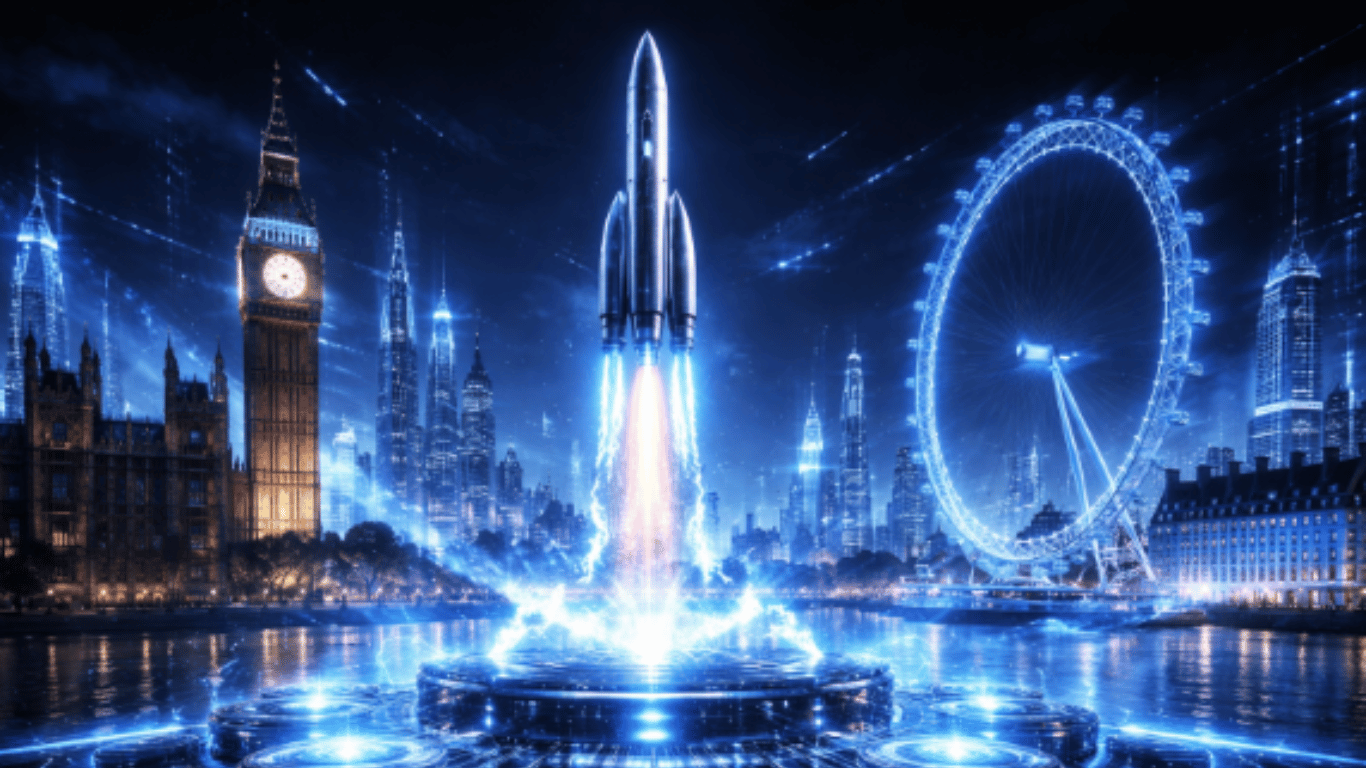
Seven days after Elon Musk confirmed the date, TERAFAB launched.
On the night of March 21, Musk took the stage at the Seaholm Historic Power Plant in Austin, Texas, and announced the largest chip manufacturing project in history. Light beams shot into the sky above the building. Texas Governor Greg Abbott sat in the audience. No construction timeline was given.
As FinTech Weekly reported when Musk confirmed the launch date, TERAFAB had been signalled since Tesla's January 28 earnings call, where Musk told investors the company needed to build its own chip fabrication facility or face a supply constraint within three to four years. The event on March 21 turned that signal into a formal announcement — with a name, a location, a cost estimate, and a production target that has no precedent in the history of private semiconductor manufacturing.
What TERAFAB Is
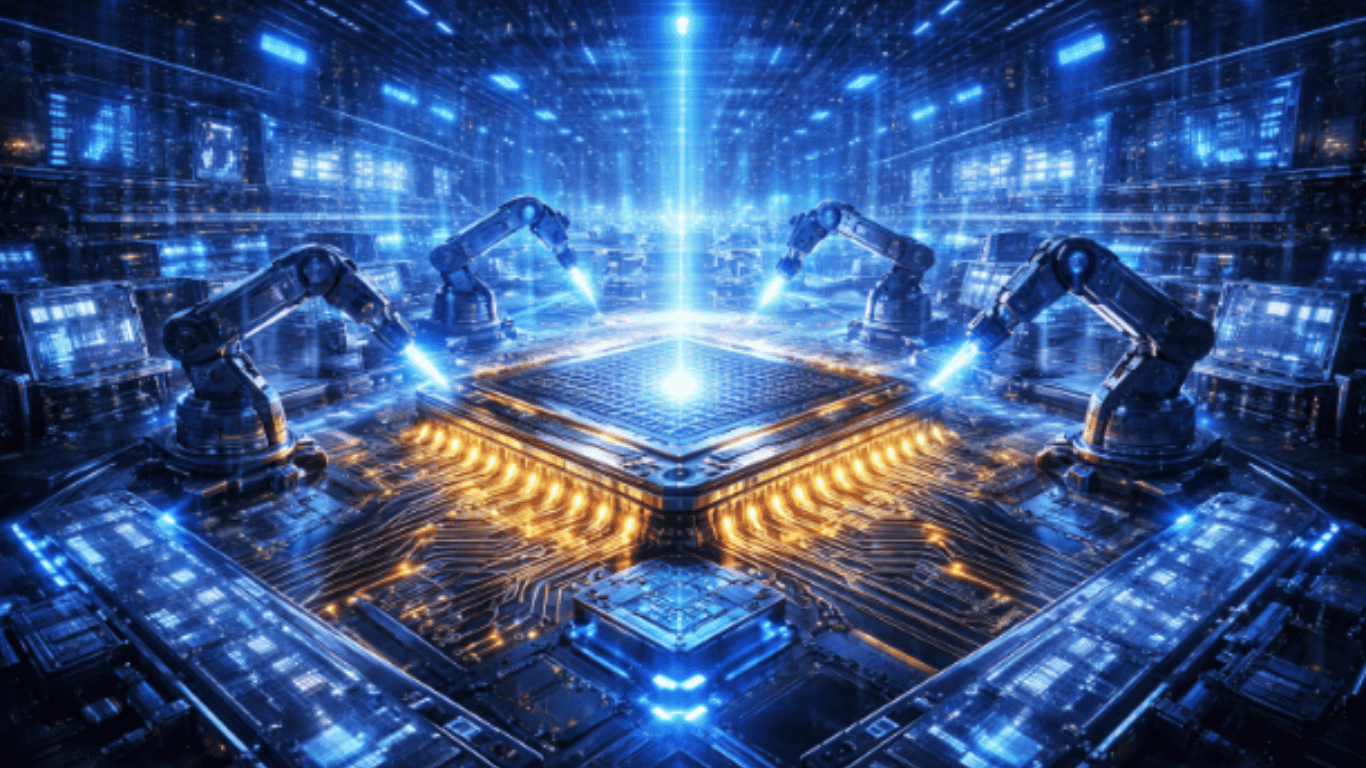
TERAFAB is a joint venture between Tesla, SpaceX, and xAI. SpaceX acquired xAI in an all-stock deal in February 2026, and the three companies now operate under combined strategic leadership with Musk as CEO of each. The facility will be built on the North Campus of Giga Texas, adjacent to Tesla's existing Austin manufacturing base, and will consolidate every stage of semiconductor production under one roof: chip design, lithography, fabrication, memory production, advanced packaging, and testing.
The goal is one terawatt of computing output per year. The combined output of every advanced semiconductor foundry currently operating on Earth represents roughly 2% of the compute Musk says his companies will need. TERAFAB is the answer to that gap — at least in intention.
The project is estimated to cost between $20 and $25 billion. Tesla's CFO confirmed at the event that this figure is not yet incorporated into Tesla's 2026 capital expenditure plan, which already exceeds $20 billion on its own.
Two Chips, Two Markets
TERAFAB will produce two distinct chip families.
The first is a terrestrial inference chip for Tesla's Full Self-Driving system, the Cybercab robotaxi programme, and the Optimus humanoid robot line. Tesla's fifth-generation AI chip, AI5, is among the first products the facility is designed to produce, with small-batch production targeted for late 2026 and volume production projected for 2027.
The second is the D3, a high-power, radiation-hardened processor built for operation in space. Temperature conditions and cosmic radiation in orbit require specifications no consumer-grade chip can meet, and D3 is designed specifically for that environment.
Musk's stated allocation: 80% of TERAFAB's compute output directed toward space. 20% for terrestrial applications. That ratio tells the real story of what the facility is for.
The Orbital Data Center
SpaceX filed an application with the Federal Communications Commission earlier this year requesting a licence to launch one million data center satellites into low Earth orbit. TERAFAB is the chip supply for that constellation.
The satellites, internally referred to as AI Sat Mini, are designed at roughly 170 metres in length and carry 100 kilowatts of onboard power for AI processing. Solar irradiance in orbit is approximately five times greater than at Earth's surface, and the vacuum of space eliminates the heat rejection problem that limits ground-based data centres. Musk's argument is that within two to three years, running AI workloads in orbit will be cheaper per watt than doing so on the ground.
The orbital infrastructure connects directly to Starship for launch capacity, and to Tesla's domestic solar manufacturing programme for terrestrial power.
The People Behind the Machine
TERAFAB does not arrive without context. FinTech Weekly covered the talent acquisition operation xAI has been running across the past several weeks. Devendra Singh Chaplot, co-founder of Mistral AI and a founding member of Mira Murati's Thinking Machines Lab, joined xAI and SpaceX to work directly on Grok model training. Before him, Andrew Milich and Jason Ginsberg, the engineers who built Cursor to a $2 billion annual revenue run rate, joined to build the product layer.
The pattern across all three hires described a coherent strategy: rebuild the model from the ground up, then ship it through product infrastructure built by people who have done it at scale. TERAFAB is the hardware layer that strategy runs on. The model layer, the product layer, and now the chip layer are all under construction simultaneously.
Musk acknowledged at the event that xAI was not built correctly the first time. Half of the original co-founders have left. The rebuild follows the same logic he has previously applied to Tesla's early development cycles, where repeated reinvention was treated as the mechanism for acceleration rather than a sign of dysfunction.
What It Means for Fintech
The fintech industry has been tracking the agentic AI layer carefully. The question of what happens when AI models have their own financial agency — conducting transactions, managing accounts, settling payments without human instruction — depends on the existence of capable, cost-effective compute at a scale that makes such systems economically viable for mass deployment.
As FinTech Weekly has reported, the AI agents question is not theoretical. The financial infrastructure to support it is being built now, and the unresolved problem is not the model capability — it is the cost and availability of the compute that runs it continuously.
A project that targets a terawatt of annual AI compute output, much of it delivered through orbital infrastructure with near-unlimited solar power, changes the supply-side assumptions that underlie every projection about how fast agentic financial systems can scale.
Whether TERAFAB reaches that output in two years, five years, or never determines how quickly that question gets answered. For now, the architecture exists. Seven days after Musk confirmed the date, it has a name and a stage.
Editor's note: We are committed to accuracy. If you spot an error, a missing detail, or have additional information about TERAFAB or the companies mentioned in this article, please email us at [email protected]. We will review and update promptly.